

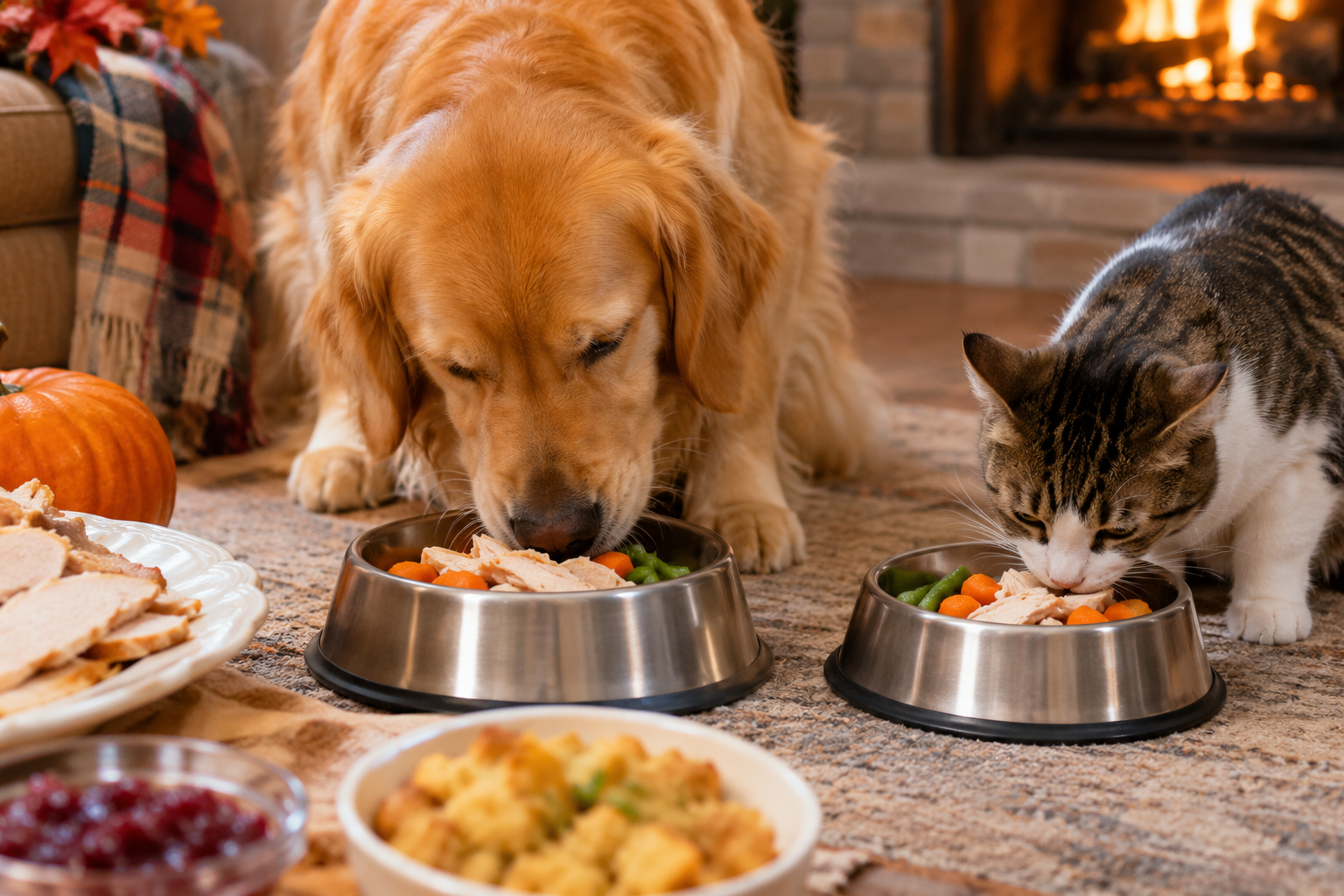
Thanksgiving dinner comes with a lot of decisions. White meat or dark meat? Pumpkin pie or pecan pie? Seconds now or leftovers tomorrow?
If you’re a pet owner, there’s one more question worth asking: Can my dog or cat eat this?
It’s a reasonable question, especially when your pet is sitting nearby, watching every bite with impressive dedication.
At Queen Creek Veterinary Clinic, we know how much families in Queen Creek, AZ, love including their pets in holiday traditions. But before you share something from your plate, it’s important to understand which Thanksgiving foods are safe, which should be avoided, and which can lead to a veterinary emergency.
Let’s Play: Safe, Skip, or Call the Vet?
Not every Thanksgiving food carries the same level of risk.
Some foods are generally safe when prepared plainly, others are best avoided because they’re rich or irritating, and certain ingredients can be genuinely toxic.
Here’s how some holiday favorites stack up.
| Thanksgiving Food | Pet Safety Recommendation |
|---|---|
| Plain cooked turkey | Safe in small amounts without skin, bones, or seasoning |
| Stuffing | Avoid due to onions, garlic, and rich ingredients |
| Mashed potatoes | Avoid typical holiday recipes with butter, cream, or garlic |
| Plain green beans | Generally safe in small amounts |
| Turkey bones | Never offer cooked bones |
| Chocolate desserts | Toxic, contact a veterinarian |
| Grapes and raisins | Dangerous for dogs, seek immediate guidance |
| Sugar-free desserts with xylitol | Emergency concern for dogs |
| Plain cooked sweet potato | Generally safe in small portions |
| Gravy | Avoid due to fat, salt, and possible onion or garlic |
The Foods That Deserve the Biggest Warning
Some ingredients are particularly concerning because they can cause serious medical complications.
Onions and Garlic
These ingredients are common in Thanksgiving recipes, especially stuffing, gravy, and casseroles.
Onions and garlic can damage red blood cells in dogs and cats, potentially causing anemia.
Cats are particularly sensitive.
The ingredients remain dangerous whether they’re raw, cooked, dried, or powdered.
Grapes and Raisins
Grapes and raisins can cause acute kidney injury in dogs.
Because the toxic amount varies unpredictably, even a small exposure should be taken seriously.
If your dog eats a raisin cookie or a dish containing grapes, contact a veterinarian immediately.
Chocolate
Chocolate contains substances that can overstimulate the heart and nervous system.
Dark chocolate and baking chocolate are especially concentrated.
Symptoms may include vomiting, diarrhea, restlessness, rapid heart rate, tremors, or seizures.
Xylitol
Xylitol is a sugar substitute found in some sugar-free foods.
In dogs, it can cause dangerously low blood sugar and liver injury.
Check ingredient labels carefully, particularly on specialty desserts and candies.
Why Plain Turkey Is Different From Thanksgiving Turkey
Turkey itself isn’t necessarily the problem.
It’s the preparation.
A small piece of plain, fully cooked, boneless, skinless turkey is usually fine for a healthy dog or cat.
But turkey covered in butter, garlic, onions, or salty seasoning should stay off your pet’s menu.
Turkey skin is especially fatty and may contribute to pancreatitis.
Cooked turkey bones can splinter, potentially causing choking, intestinal injury, or blockages.
If your pet swallows a cooked bone, contact your veterinarian for guidance rather than trying to induce vomiting.
What About Pumpkin Pie?
Pumpkin is often associated with digestive health in pets, but that doesn’t mean pumpkin pie is a good choice.
Plain, unsweetened pumpkin can be appropriate for many dogs and cats in small amounts.
Pumpkin pie, however, typically contains sugar, spices, dairy, and other ingredients that may cause digestive upset.
Some recipes or specialty products may also contain ingredients that are unsafe for pets.
If you’d like to share pumpkin, choose plain pumpkin without added sugar or spices.
The Hidden Risk of Thanksgiving Leftovers
The danger doesn’t disappear when dinner ends.
In fact, cleanup time can be one of the riskiest parts of the holiday.
A turkey carcass left on the counter, discarded bones in an open trash can, or unattended dessert plates can become easy targets.
Dogs may rummage through garbage, while cats might investigate greasy pans or leftover meat.
To prevent accidents, secure trash containers, refrigerate leftovers promptly, and keep food out of reach.
Make sure guests understand that pets shouldn’t receive table scraps without permission.
My Pet Ate Something Dangerous. What Should I Do?
Start by identifying what your pet consumed.
Try to determine the ingredients, approximate amount, and time of ingestion.
If possible, save the packaging or recipe information.
Contact your veterinarian or an emergency veterinary hospital promptly.
For suspected poisoning, ASPCA Animal Poison Control and Pet Poison Helpline can also provide guidance.
Do not give hydrogen peroxide, salt, oil, or other home remedies unless specifically instructed by a veterinary professional.
Never attempt to make a cat vomit at home.
Symptoms That Shouldn’t Be Ignored
Watch for vomiting, diarrhea, excessive drooling, weakness, abdominal pain, or unusual behavior.
More serious signs include difficulty breathing, tremors, seizures, collapse, or a swollen abdomen.
Some toxicities can cause delayed symptoms, so don’t assume your pet is safe simply because they seem normal immediately after eating something concerning.
Create a Thanksgiving Tradition Just for Your Pet
Instead of sharing from your plate, consider making your pet a small holiday treat.
A few bites of plain turkey or unseasoned vegetables may be suitable for healthy pets.
You could also give your dog a food puzzle or your cat a favorite interactive toy while the family eats.
For pets with medical conditions, food allergies, or sensitive stomachs, their regular diet is often the safest choice.
Celebrate Thanksgiving With Confidence
Thanksgiving should be full of happy memories, not questions about whether your pet needs emergency care.
By understanding which foods are safe and keeping dangerous ingredients out of reach, you can help protect your dog or cat throughout the holiday.
At Queen Creek Veterinary Clinic in Queen Creek, AZ, we’re committed to helping local pets stay healthy through every season.
If your pet eats something questionable or develops symptoms after a holiday meal, contact our team for guidance. For severe symptoms or suspected poisoning, seek emergency veterinary attention immediately.