
Pet Dental Services in Queen Creek, AZ
Healthy teeth can make a noticeable difference in how your pet eats, feels, and functions every day. At Queen Creek Veterinary Clinic, our pet dental services in Queen Creek are designed to address plaque, tartar, gingivitis, periodontal disease, damaged teeth, and other oral health concerns before they become more painful or complicated. Our team provides thorough anesthetic dental cleanings, digital dental imaging, tooth extractions when necessary, and individualized monitoring throughout the procedure. If you are looking for a Queen Creek pet dentist who combines careful diagnostics with comprehensive oral care, our team is here to help.
Why Pet Dental Care Matters More Than Fresh Breath
Bad breath may be one of the first things owners notice, but dental disease can involve much more than an unpleasant smell. Plaque and tartar can build up above and below the gum line, allowing bacteria to irritate the gums and contribute to gingivitis. As disease progresses, pets may experience gum recession, bone loss, loose teeth, infection, and significant discomfort that can affect eating and overall quality of life.
Regular professional cleanings allow us to remove buildup that brushing alone may not address, particularly below the gum line. They also give our veterinary team an opportunity to examine each tooth carefully and look for problems that may be hidden beneath the surface. Long-term oral disease has also been associated with broader health concerns, which is another reason we encourage owners to treat dental care as part of routine preventive medicine rather than an occasional cosmetic service.
Signs Your Dog or Cat May Need a Dental Cleaning
Pets are very good at hiding mouth pain, so dental problems are not always obvious at first. Some dogs and cats continue eating even when they have advanced periodontal disease, broken teeth, or painful inflammation. Paying attention to subtle changes at home can help you recognize when an oral evaluation may be needed.
Common signs of dental disease include:
- Persistent bad breath
- Excessive drooling
- Chattering teeth
- Brown, yellow, or discolored teeth
- Missing or visibly loose teeth
- Blood in the mouth
- Difficulty chewing or changes in eating habits
- Visible tartar along the gum line
We also offer a no-cost dental evaluation with one of our technicians during regular business hours. During that visit, our team can assess your pet’s oral health, evaluate tartar and periodontal disease, and help determine whether a professional cleaning or veterinarian examination should be the next step.
A Thorough 20-Step Professional Dental Cleaning
A professional pet dental cleaning is similar in many ways to a human dental cleaning, but there is one important difference: pets need general anesthesia so we can safely and thoroughly clean above and below the gum line. Dogs and cats cannot be expected to remain completely still while we scale beneath the gums, probe individual teeth, take dental images, polish enamel, and perform other detailed procedures. Anesthesia allows us to complete those steps properly while reducing stress and uncontrolled movement.
Our 20-step professional dental process includes careful preparation, cleaning, diagnostic assessment, and recovery. The full cleaning is currently $495 and includes many of the steps necessary to evaluate and improve your pet’s oral health.
Our process includes:
- Pre-anesthetic examination
- Placement of an IV catheter
- Pre-anesthetic bloodwork
- Pre-anesthetic sedation
- Induction of anesthesia
- Continuous monitoring equipment
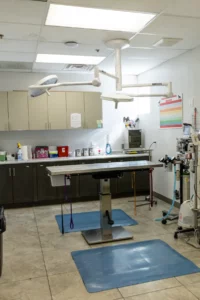
- Dental table and instrument preparation
- Advanced CT dental imaging
- Review of dental imaging
- Intravenous fluid therapy
- Ultrasonic scaling
- Subgingival curettage
- Dental exploration and probing
- Full-mouth dental charting
- Before and after documentation
- Tooth polishing
- Ozonated saline rinse
- Fluoride treatment
- Monitored patient recovery
- Home care instructions
This detailed approach also helps us do more than simply make the teeth look cleaner. We’re evaluating the health of the gums, checking for pockets and damaged structures, documenting findings, and identifying disease that may require treatment beyond routine scaling.
What Happens Below the Gum Line
One of the most important parts of professional dental care happens where owners cannot see it. After visible tartar is removed with an ultrasonic scaler, we clean beneath the gum line to remove plaque and calculus from areas where periodontal disease often begins. Our team then uses dental probes to evaluate the tissues around individual teeth and identify pockets, loose teeth, fractures, or other concerning findings.
We chart your pet’s mouth so that dental changes can be tracked over time. When we discover deep pockets, broken teeth, suspected root disease, or other abnormalities, dental imaging can help us evaluate what is happening beneath the gums. That information can make the difference between unnecessarily removing a tooth and preserving one that remains healthy enough to keep.
Dental Imaging and Tooth Extractions
Dental disease often extends below the visible portion of the tooth, which is why imaging plays an important role in our dental procedures. We use specialized dental imaging to look for concerns such as root abscesses, bone loss, fractures, and other conditions that cannot always be diagnosed by looking at the tooth alone. Imaging may also be used before an extraction or during more complicated extraction cases to guide treatment.
When a tooth is severely damaged, infected, loose, or painful, extraction may be the best option for restoring comfort. Extraction pricing currently ranges from $65.66 to $300.49 per tooth depending on the complexity of the procedure. Pets requiring extractions may also go home with pain medication, antibiotics, or other instructions based on their individual needs.
How We Monitor Pets During Anesthesia
Because professional dentals require anesthesia, we treat them with the same careful monitoring used for surgical procedures. Every pet is examined by our veterinarian before the procedure begins, and the doctor develops an anesthetic and pain management plan based on that animal’s age, health, medical history, and individual needs. Our dedicated veterinary staff monitors the patient throughout anesthesia and records important changes from induction through recovery.
Monitoring may include breathing, end-tidal CO2, oxygen saturation, blood pressure, and other vital measurements. Pets are also catheterized and placed on intravenous fluids, which help support blood pressure, maintain hydration, and give our team immediate access to the circulatory system if medications are needed. We continue watching your pet as anesthesia wears off and do not consider the process complete until recovery is progressing appropriately.
Preventing Periodontal Disease Before It Becomes Severe
Dental disease tends to become more difficult and expensive to treat as it advances. Mild plaque and gingivitis may be reversible with timely care, while later stages can involve significant bone loss, gum recession, loose teeth, painful infection, and the need for multiple extractions. That progression is why consistent preventive dental care can make such a meaningful difference over the course of your pet’s life.
Our current recommendation is typically professional dental cleaning every 6 to 12 months, depending on the pet’s oral health and risk factors. Home brushing and veterinarian-approved dental care products can also help slow plaque accumulation between professional cleanings. Some pets need more frequent attention because of breed, age, anatomy, immune conditions, or a history of periodontal disease.
Pet Dental Care for Dogs and Cats
Dogs and cats can both develop significant dental disease, but the problems do not always look exactly the same. Cats, for example, may develop painful resorptive lesions that damage tooth structure and sometimes require extraction or crown amputation. Dogs commonly develop progressive tartar buildup, gingivitis, periodontal pockets, gum recession, and eventual bone loss if dental disease is allowed to advance.
Our role as a Queen Creek pet dentist is to evaluate what is happening in your individual pet’s mouth rather than assuming every animal needs the same treatment. By combining a physical examination, probing, charting, cleaning, and diagnostic imaging when appropriate, we can build a clearer picture of what your dog or cat needs now and what may help prevent future problems.
Frequently Asked Questions
Our current 20-step professional preventive dental cleaning is $495. Additional costs may apply if your pet requires extractions, medications, advanced treatment, or other services identified during the procedure.
Yes, general anesthesia allows us to safely clean above and below the gum line, take diagnostic images, probe teeth, and complete a thorough oral assessment. It also keeps your pet still and comfortable during a procedure that would otherwise be stressful and incomplete.
Many pets benefit from professional cleaning every 6 to 12 months, although the ideal schedule depends on age, breed, oral health, and previous dental disease. Our team can recommend a timeline after evaluating your pet’s mouth.
If we identify a painful, infected, loose, or severely damaged tooth, extraction may be recommended. Current extraction pricing ranges from $65.66 to $300.49 per tooth depending on complexity, and we will provide appropriate pain management and home care instructions.
Yes, we offer no-cost dental evaluations with one of our technicians during regular business hours. If extensive disease is present, we may recommend a full veterinarian examination so we can address additional concerns before the dental procedure.
Give Your Pet a Healthier, More Comfortable Smile
Your pet’s mouth deserves the same attention as the rest of their health, especially when dental disease can progress quietly before obvious symptoms appear. Luckily, at Queen Creek Veterinary Clinic, our dental services combine preventive cleaning, advanced imaging, careful anesthesia monitoring, periodontal evaluation, and extraction treatment when needed. We also serve pet owners throughout Queen Creek and nearby communities in Maricopa and Pinal counties with an emphasis on comfort, transparency, and thorough care. So don’t wait: just call (480) 987-8000 today to schedule a dental evaluation or ask our team whether your dog or cat may be due for a professional cleaning.