

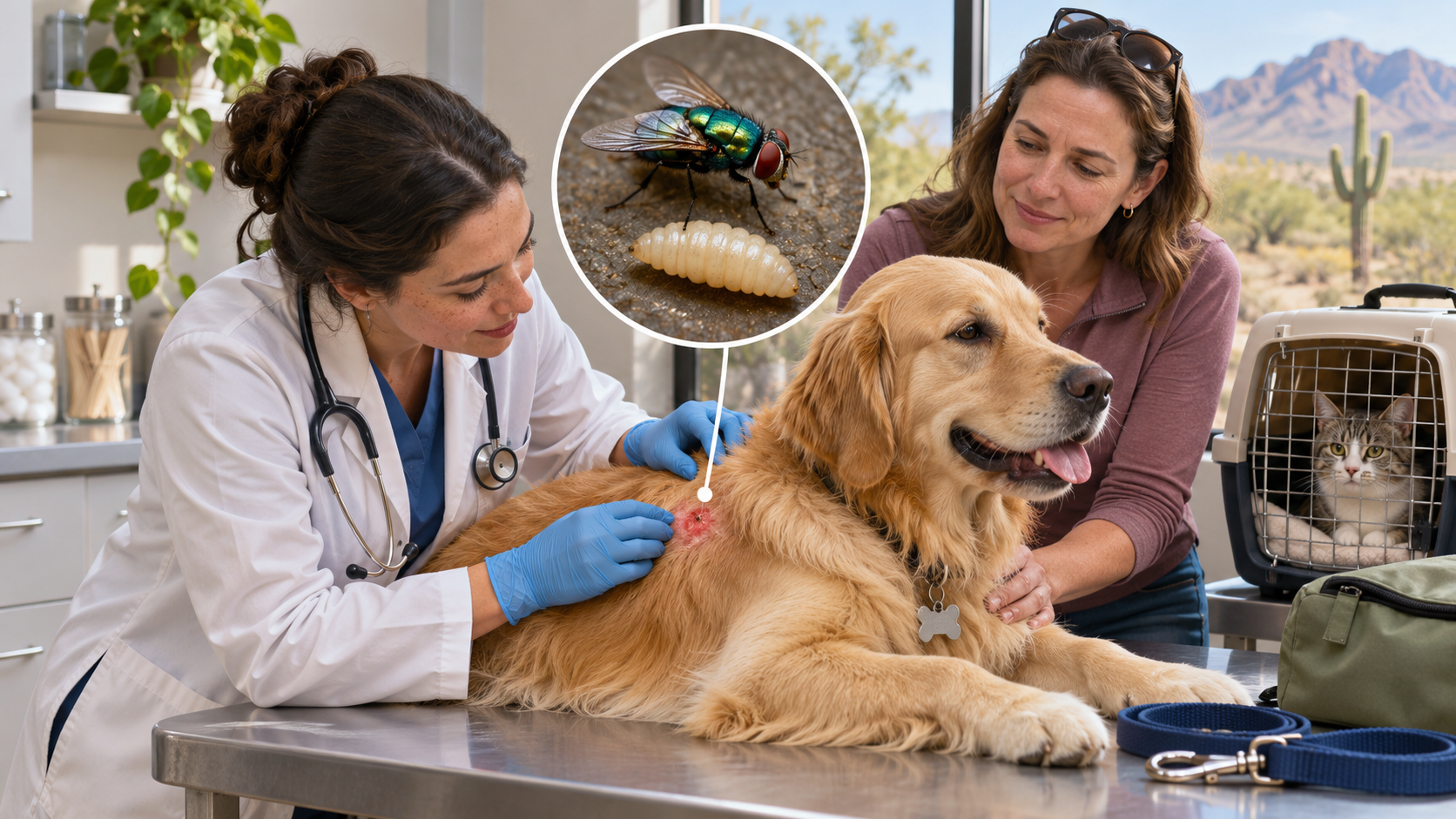
Parasites are an unfortunate part of pet ownership, but some deserve extra attention because of the damage they can cause.
New World screwworm is a fly that lays eggs in wounds or body openings. Its larvae feed on living tissue, which can lead to serious injury if an infestation isn’t treated promptly.
What Makes a Wound Concerning?
A wound that keeps getting larger or deeper, develops swelling, produces bloody discharge, or has an unpleasant smell should be examined.
Visible larvae are another urgent warning sign. Some pets also experience pain, excessive licking, head shaking, lethargy, irritability, or reduced appetite.
If you suspect screwworm, seek veterinary care immediately rather than attempting to remove larvae at home. Suspected infestations require proper treatment and reporting.
Should Your Pet Be on Prevention?
Year-round flea and tick protection is an important part of wellness care for dogs and cats. Several commonly prescribed parasite medications have received FDA authorization for treating screwworm infestations, and your veterinarian can help determine which product is appropriate.
What If You’re Traveling?
Animal entry requirements vary by destination and may change as screwworm activity changes.
Some states require a recent veterinary examination, Certificate of Veterinary Inspection, specific screwworm documentation, or an entry permit.
California has additional restrictions for pets entering from designated affected areas. Visit CDFA for the latest information.
Queen Creek Veterinary Clinic is here to help local pet owners navigate preventive care, concerning symptoms, and travel-related questions.
Helpful Links for Pet Health and Travel
Whether you’re concerned about a potential infestation or preparing to travel, these resources can help. Review USDA updates on New World screwworm, explore the FDA’s authorized medication information, and check California’s screwworm entry requirements for pets arriving from affected regions.>/p>